A Guide for Small and Medium-Sized Enterprises
How small and medium-sized enterprises start on the road to the self-driving company: six steps, an example from construction, and a look ahead.
Date
Author
Reading time
Tags

Small and medium-sized enterprises are the backbone of the economy in Germany, Austria, and Switzerland, and at the same time they are the businesses in which intelligent software most rarely gets beyond the core processes. To close this series on the self-driving company, I therefore turn to SMEs: what the vision means for a business with 30, 80, or 200 employees, where it should start, and which decisions deliberately remain with people. The post ends with a look ahead at the state, with which every business exchanges data every day.
Why the vision applies to SMEs as well
According to the European Commission's definition (Recommendation 2003/361/EC), small and medium-sized enterprises are companies with fewer than 250 employees and an annual turnover of at most 50 million euros or a balance sheet total of at most 43 million euros; according to the Commission, that is around 99 percent of all companies in the European Union. Anyone who talks about the self-driving company and means only large corporations therefore overlooks the largest part of the economy.
The premise of the book "The Self-Driving Company" (Springer 2023; German original "Das selbstfahrende Unternehmen", Springer Gabler 2021) is that around 80 percent of a company's functions and decisions can be taken over by software. That figure does not depend on company size. A machine builder with 120 employees knows the same types of processes as a corporation: inquiry, quotation, order, purchasing, production, delivery, invoice, reminder, maintenance. It simply has them in smaller volumes, with less software in between and with more people gathering data by hand.
That is exactly where the problem lies. In the typical family business, digitalization is confined to the core processes: production is networked under the heading of Industry 4.0, an ERP system manages orders and inventories, an online shop takes orders. The support processes, by contrast, run largely on an analog basis: decisions are made by people who first consolidate data from several systems in spreadsheets. With every new data source, the pressure at this interface grows, felt as information overload, constant availability, and error-proneness. The ERP system has not abolished the linear process, it has accelerated it; approvals, entries, and checks are still done by people.
Not every business model needs the vision. The small workshop in an Alpine village that makes made-to-measure lederhosen by hand and writes its invoices by hand has deliberately decided against scaling and makes a good living from it as long as the market accepts the high price. The large majority, however, sit in supply chains where partner companies and authorities expect digital interfaces, and compete with providers who understand their customers better through data.
Why the digitalization strategy so far falls short
SMEs have invested heavily in production and value-creation processes over the past decades. What was lost from view is the potential outside production. Three patterns come up again and again in our projects:
- Sales and production are not connected. Sales planning and production planning live in separate worlds with their own tools and people. Whoever connects the two can plan more accurately and deliver more reliably.
- Customer knowledge sits in people's heads. Who the right customers are and how to reach them is known by the salespeople, not by the system. Because this implicit knowledge confers a position of power, it is rarely passed on, and part of it is lost with every change of staff.
- The most laborious process has nothing to do with value creation. The example of a general planner in the construction industry from the book shows this. He breaks a project down into partial services and describes them in tender documents of more than 100 pages with thousands of items. An estimator at the construction company then prices those items, driven by experience and intuition: too high, and the contract is lost; too low, and it does not pay. The gut feeling of a single person thus decides projects worth millions, and the whole procedure has not yet built a single square meter of building. In the self-driving construction company, the digital plan with all its details is enough; capacity utilization, recorded effort, and earlier quotations flow into the calculation, and a person checks and approves.
Then there is time. In the book I expressed the expectation that the changes will become visible on a large scale by around 2030 and that the curve will rise steeply after that. Anyone who only then wants to replace the old ERP system must, by my estimate in the book, allow four to five years. Smaller companies have it easier because they can source small-scale, cloud-based software products with intelligent functions; the single, decisive condition is clean integration into the overall system.
A small digital unit as a lighthouse meant to outshine the idle rest is not enough. It is about the entire company, not the business model: if the business model works today, it will in all likelihood work in the self-driving company too. What changes is how the business captures data, makes decisions, and communicates with its environment. With short decision paths and an owner who can decide for herself or himself, that is considerably easier than in a corporation.
Six steps toward the self-driving SME
- Take stock. Which data arise where, in what form, and who gathers them by hand today? Count the spreadsheets sent back and forth between departments; each one is a missing interface. The goal from the book is to hold around 80 percent of all company data in machine-readable, processable form.
- Look at the whole company. Formulate a target picture for all areas, not a pilot project for one. The business model stays, the organization of the data flows changes. As the owner, define which decisions may in future be made by rules and which remain with you.
- Start with the routines, not with value creation. Do not wait until a technology is mature as a whole. Start where data are already digital: if a CRM system exists, reply emails, appointment scheduling, and newsletter distribution can be automated; the newsletter's text still comes from an expert. In appointment scheduling, for example, the software compares everyone's free slots and proposes a time, instead of phone calls and email chains going round in circles. How quickly such applications take hold was demonstrated by video conferencing during the pandemic.
- Integration before feature variety. Source software products only if they offer open interfaces and fit into a shared data model. Connect sales and production first, then purchasing and warehouse, then accounting. An intelligent island is not intelligence but one more spreadsheet someone has to reconcile.
- From automation to intelligent decisions. Automatic appointment scheduling is automation, not yet intelligence. It becomes intelligent when the software recognizes from internal and external data that an appointment is needed: a large order comes in, the system determines that too few steel components are in stock and that the current supplier has no capacity, researches the best bidders, and sends the buyer a proposed appointment together with alternative suppliers, to be approved with one click. The same pattern applies to maintenance: the technician receives the diagnosis, instructions, and location whenever the system cannot carry out the maintenance itself.
- Keep the meta-decisions with people. Software decides only within a framework that people have defined beforehand: thresholds, rules, approval levels. Designing, reviewing, and evolving that framework is the real leadership task, as I described in the post How Self-Driving Companies Decide. And personal contact remains: especially in B2B business and with products that need explaining, the decisive sales contact still takes place from person to person, supported by data rather than by intuition alone.
Where software decides and where people remain
What people handle today with phone, email, and spreadsheets is taken over by software in the self-driving business; people remain where approval, relationship, and exception are at stake.
| Area | In the typical SME today | In the self-driving SME |
|---|---|---|
| Appointment scheduling | Phone calls and email chains | Software compares calendars and proposes a time |
| Quotation in construction | Estimate based on experience and intuition | Calculation from plan, capacity, and history; a person approves |
| Purchasing under shortage | Shortage noticed late | Software detects, researches, proposes; a person confirms |
| Sales | Customer knowledge held by individuals | Data in the system, personal contact remains |
| Maintenance | Breakdown, phone call, search | Diagnosis and instructions sent to the technician |
Since ChatGPT became available in November 2022, many owners have experienced for themselves, for the first time, that software understands and formulates text. That lowers the threshold. But a language model alone does not make a self-driving company: without machine-readable data and integrated systems, it remains an assistant for text. What makes cognitive software more than that, I explained in the post Cognitive Software Is More Than Artificial Intelligence.
The business model stays. What changes is how the business captures data, makes decisions, and communicates with its environment.
The fear of change and what history teaches
Some people find the idea of a self-driving business frightening, in SMEs often more so than in corporations, because the owner personally knows the people affected. A look back helps. Every technological leap was preceded by fears: in the 19th century, rail travel above 50 km/h was thought to endanger health; when machines entered the factories, people feared for their jobs; the same repeated itself with the PC in the office and with the internet. None of these fears came true; the demand for human labor depends far more on the economic cycle than on the technology of the day. What did disappear were the businesses that clung stubbornly to old habits: Nokia and Kodak on the large scale, countless companies whose names nobody remembers on the small one.
For SMEs, in my view, there is one more argument: what is scarce today is not the work but the time of the people who do it. Handing routines over to software does not replace skilled staff; it gives the staff you have the time for what customers actually pay for: the product, the advice, the solution to the problem.
From the company to the state: what comes next
With this nineteenth post, the series on the self-driving company comes to an end. It began in August 2022 with the summary of the book and led from algorithms, architecture, decisions, cognitive software, transparency, and value creation to people and their environment. Since November 2023 the book has also been available in English as "The Self-Driving Company" (Springer).
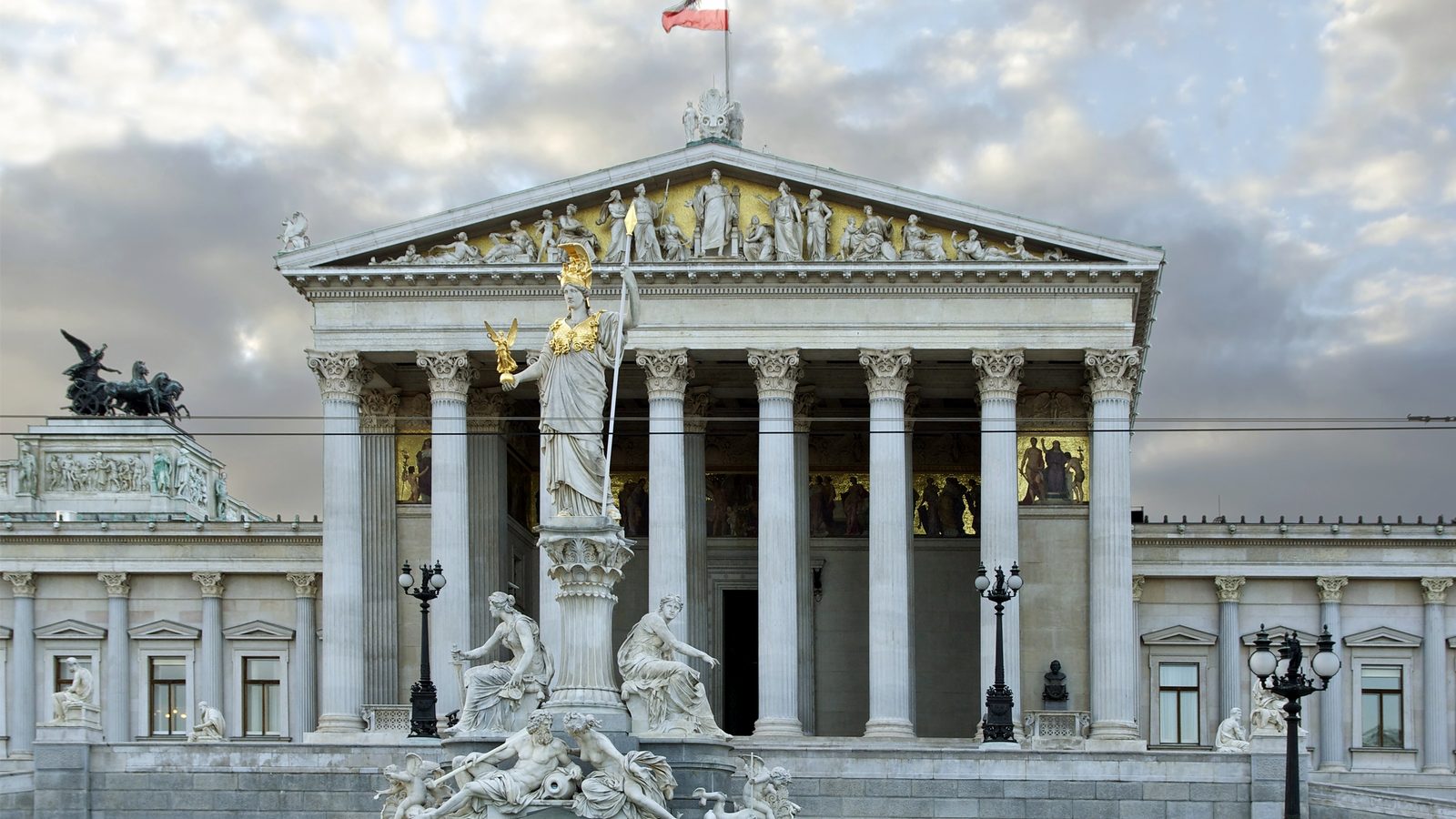
One question remained open, and SMEs pose it particularly clearly: a business can only become as self-driving as its environment allows. With no partner does a company exchange data as regularly as with the state: business registration, taxes, social insurance, grant applications, statistical reports, permits. As long as these interfaces consist of forms and portals, part of every business inevitably remains analog. That is why, together with Patrick Pils and Philipp Seper-Ambros, I have transferred the vision to public administration. The book "Der selbstfahrende Staat" (the self-driving state) is being published by Springer Gabler this year, and a new series on it starts here in March.
The next step
The complete guide to evolution on which the six steps build can be found in the book "The Self-Driving Company" (Springer 2023): About the book. If you would like to know which routines in your business can be handed over to software first and which interfaces are missing for that, we would be glad to talk about it: Book an expert meeting.
More articles


Get in touch
Arrange a no-obligation initial conversation with our contact person.
Christian Buchegger
Chief Sales Officer & Authorised Signatory